•  
Illustration - Bourges

Illustration - Bourges

FRANCE. CHER (18) BOURGES 2028. EUROPEAN CAPITAL OF CULTURE. DETAIL OF THE STAINED GLASS WINDOWS IN SAINT-ETIENNE'S CATHEDRAL. THE STAINED GLASS WINDOWS WERE CREATED BETWEEN THE 13TH AND 16TH CENTURIES. THE 16TH-CENTURY WINDOWS ARE THE WORK OF MASTER GLASSWORKER JEAN LECUYER. Photo by Antoine Lorgnier/Only France/ABACAPRESS.COM

  •  
Illustration - Bourges

Illustration - Bourges

FRANCE. CHER (18) BOURGES 2028. EUROPEAN CAPITAL OF CULTURE. DETAIL OF THE STAINED GLASS WINDOWS IN SAINT-ETIENNE'S CATHEDRAL. THE STAINED GLASS WINDOWS WERE CREATED BETWEEN THE 13TH AND 16TH CENTURIES. THE 16TH-CENTURY WINDOWS ARE THE WORK OF MASTER GLASSWORKER JEAN LECUYER. Photo by Antoine Lorgnier/Only France/ABACAPRESS.COM

  •  
Illustration - Loire Valley

Illustration - Loire Valley

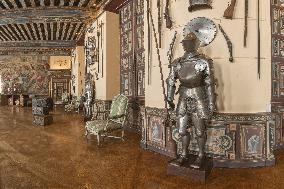
FRANCE - LOIRE VALLEY - LOIR ET CHER (41) - CASTLE OF CHEVERNY : THE ARMS ROOM, THE BIGGEST ROOM OF THE CASTLE. THE COLLECTIONS OF WEAPONS AND ARMOR DATE BACK TO THE 15TH, 16TH AND 17TH CENTURIES. IN THE BACKGROUND, A GOBELINS TAPESTRY OF THE SEVENTEENTH CENTURY REPRESENTS "THE ABDUCTION OF THE BEAUTIFUL HELEN". Photo by Stephane Compoint/Only France/ABACAPRESS.COM

  •  
Illustration - Aerial View of France

Illustration - Aerial View of France

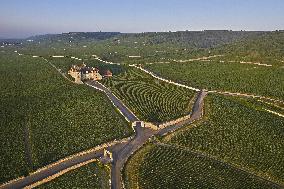
FRANCE. BURGUNDY; COTE-D'OR (21) THE CHATEAU DU CLOS DE VOUGEOT (SAINT SIEGE DES CLIMATS), IN CISTERCIAN AND RENAISSANCE STYLE, WAS BUILT BETWEEN THE 12TH AND 16TH CENTURIES, IN THE HEART OF THE CLOS-VOUGEOT VINEYARDS IN VOUGEOT, ON THE ROUTE DES GRANDS CRUS BETWEEN DIJON AND BEAUNE. IT HAS BEEN LISTED AS A HISTORIC MONUMENT SINCE 1948, AND IS MANAGED BY THE CONFRERIE DES CHEVALIERS DU TASTEVIN. Photo by Stephane Compoint/Only France/ABACAPRESS.COM

  •  

Exhibition on Inca civilization opens in China

STORY: Exhibition on Inca civilization opens in China SHOOTING TIME: Jan. 10, 2024 DATELINE: Jan. 11, 2024 LENGTH: 00:00:51 LOCATION: CHENGDU, China CATEGORY: CULTURE SHOTLIST: 1. various of the exhibition STORYLINE: An exhibition on the Inca civilization opened Tuesday at the Jinsha Site Museum in the southwestern Chinese city of Chengdu. This exhibition showcases 168 pieces or sets of exhibits from 14 museums in Peru, including boneware, ceramics, metals, stoneware, woodware, textiles, paintings, and mummies. The exhibition opened to the public on Wednesday and will last until April 10. It also offers online 360-degree panoramic tours and live broadcasts. The Inca civilization, one of the three major civilizations in the Americas, originated in the Peruvian Andes. It prospered between the 15th and 16th centuries AD, leaving behind world-famous historical and cultural relics. The exhibition is divided into four parts, including a section dedicated to the ancient civilization of the Andes and

  •  
Celebration of Izium liberation anniversary

Celebration of Izium liberation anniversary

IZIUM, UKRAINE - SEPTEMBER 10, 2023 - The text of the Lord's Prayer written in Cossack skoropys, a type of Cyrillic calligraphic handwriting that was widely used in Zaporozhian Cossack documents in the 16th-18th centuries, is seen on the wall of the House of Culture on the first anniversary of the liberation of the city from Russian invaders, Izium, Kharkiv Region, northeastern Ukraine.

  •  

AI helps identify lost work by Spain's key author from "Golden Age"

STORY: AI helps identify lost work by Spain's key author from "Golden Age" DATELINE: Feb. 7, 2023 LENGTH: 0:01:14 LOCATION: Madrid CATEGORY: CULTURE SHOTLIST: 1. various of books by Felix Lope de Vega 2. various of Spain's National Library STORYLINE: Artificial intelligence (AI) technology has led to the discovery of a lost play by one of the greats of Spanish literature, Felix Lope de Vega. The National Library on Jan. 31 confirmed that Lope de Vega, a key author of Spain's Golden Age, wrote "La francesa Laura" (The Frenchwoman Laura) a few years before he died in 1635. Since 2017, scholars from the universities of Valladolid and Vienna have been using AI to help determine the authorship of plays from the 16th and 17th centuries. "La francesa Laura," which was catalogued in the library's archive of 85,000 works as anonymous, was among 1,300 Golden Age plays transcribed by the text recognition platform, Transkribus. The text was then identified after it was analyzed by the Stylo AI program, which compa

  •  
Massive pottery plates found from over 70 holes in Kyoto

Massive pottery plates found from over 70 holes in Kyoto

KYOTO, Japan - A worker digs out pieces of pottery ware from more than 70 holes, believed to date back to a period from the 12th to 16th centuries, at an excavation site in Kyoto, western Japan, on Jan. 8, 2015. The holes are believed to be either for ritual or burial purposes.

  •  
Massive pottery plates found in Kyoto

Massive pottery plates found in Kyoto

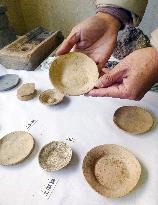
KYOTO, Japan - A massive amount of earthenware plates, believed to date back to a period from the 12th to 16th centuries, is shown in Kyoto, western Japan, on Jan. 8, 2015. Unearthed from more than 70 holes at an excavation site in the ancient Japanese capital, the holes are believed to be either for rituals or burials.

  •  
Trace of liquefaction found in ruins in Oita

Trace of liquefaction found in ruins in Oita

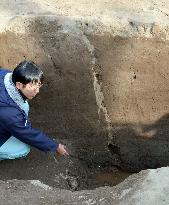
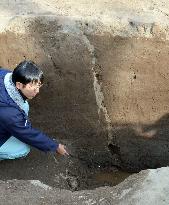
OITA, Japan - A man points to traces of soil liquefaction (white part) in the city of Oita, Japan, on Dec. 15, 2014, believed to have caused by a big earthquake between the 16th and 18th centuries. The traces were discovered during an excavation of a dwelling site in the remains from the age of provincial wars in the late 15th to 16th centuries.

  •  
Bronze fitting from medieval period found in north Japan

Bronze fitting from medieval period found in north Japan

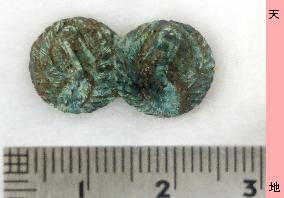
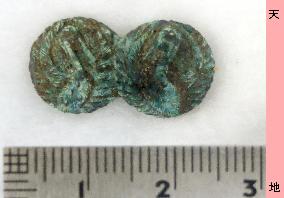
NANBU, Japan - A bronze fitting with two cranes facing each other -- a family crest of the medieval Nanbu clan --carved on it is shown in this photo taken in Nanbu, Aomori Prefecture, northeastern Japan, on Sept. 29, 2014. The fitting was found in the remains of a hilltop castle owned by the Nanbu clan from the 12th to 16th centuries.

  •  
Lion dance closes Nagano Olympics

Lion dance closes Nagano Olympics

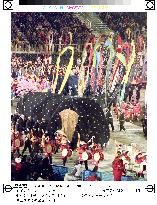
A traditional ''shishi-mai'' or lion dance is performed at the closing ceremony of the Nagano Winter Olympics on Feb. 22. The dance spread throughout Japan in the medieval period (13-16th centuries) as a form of exorcism.

  •  

Uffizi art feast to celebrate China-Italy Year of Culture and Tourism

STORY: Uffizi art feast to celebrate China-Italy Year of Culture and Tourism DATELINE: Sept. 3, 2022 LENGTH: 00:01:08 LOCATION: SHANGHAI, China CATEGORY: CULTURE SHOTLIST: 1. SOUNDBITE (English): SUN LIPING, Xinhua correspondent 2. various of artworks 3. SOUNDBITE (Italian): ROCCO CARLO GENCHI, Deputy Consul General of Italy in Shanghai STORYLINE: SOUNDBITE (English): SUN LIPING, Xinhua correspondent "The Uffizi is one of the world's most renowned art museums. Now, a big event is coming to Shanghai as we celebrate the China-Italy Year of Culture and Tourism. The Uffizi has brought Shanghai 50 epic pieces of art, including self-portraits of Raphael, Rembrandt, and Rubens." The highly anticipated exhibition "Uffizi Self-Portrait Masterpiece" will be unveiled on Sept. 9 at Shanghai Bund One Art Museum, one of Shanghai's emerging landmarks. A total of 50 masterpieces from the 16th to 20th centuries preserved by the Italian gallery have arrived in Shanghai. SOUNDBITE (Italian): ROCCO CARLO GENCHI, Deputy Con

  •  

National costume festival held in Mongolia to promote tourism

STORY: National costume festival held in Mongolia to promote tourism DATELINE: July 10, 2022 LENGTH: 00:00:55 LOCATION: Ulan Bator CATEGORY: CULTURE/ENTERTAINMENT SHOTLIST: 1. various of national costume festival STORYLINE: The 16th edition of Mongolia's national costume festival kicked off in Ulan Bator on Saturday to promote the pandemic-hit tourism sector and encourage the younger generation to wear traditional clothing. More than 10,000 people dressed in traditional costumes participated in the annual festival titled "Mongolians in Deel" in the central square of Ulan Bator, according to the capital city's Department of Tourism. Deel is an item of traditional Mongolian clothing commonly worn for centuries. The one-day festival included numerous activities such as a fashion parade, the best deel contest, a national clothing exhibition and a folk music concert and dance. Xinhua News Agency correspondents reporting from Ulan Bator. (XHTV)

  •  
New Year flower arranging ceremony

New Year flower arranging ceremony

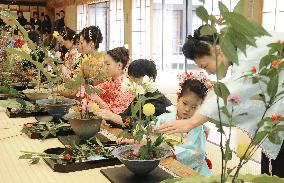
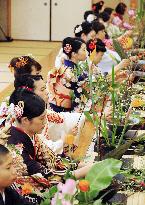
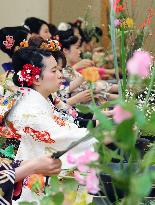
Dressed in kimono, disciples of the Ikenobo Japanese flower arrangement school participate in a New Year flower arranging ceremony in the ancient Japanese city of Kyoto on Jan. 5, 2016. Around 1,500 people took part in the annual tradition, which first began in the Muromachi period between the 14th and 16th centuries. (Kyodo) ==Kyodo

  •  
New Year flower arranging ceremony

New Year flower arranging ceremony

Dressed in kimono, disciples of the Ikenobo Japanese flower arrangement school participate in a New Year flower arranging ceremony in the ancient Japanese city of Kyoto on Jan. 5, 2016. Around 1,500 people took part in the annual tradition, which first began in the Muromachi period between the 14th and 16th centuries. (Kyodo) ==Kyodo

  •  
New Year flower arranging ceremony

New Year flower arranging ceremony

Dressed in kimono, disciples of the Ikenobo Japanese flower arrangement school participate in a New Year flower arranging ceremony in the ancient Japanese city of Kyoto on Jan. 5, 2016. Around 1,500 people took part in the annual tradition, which first began in the Muromachi period between the 14th and 16th centuries. (Kyodo) ==Kyodo

  •  
Crown prince visits Kyoto exhibition of feudal Japanese paintings

Crown prince visits Kyoto exhibition of feudal Japanese paintings

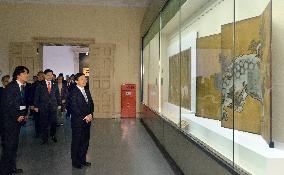
Crown Prince Naruhito (R) visits a special exhibition of Japanese paintings by the famed Kano school of artists in the 16th to 17th centuries at the Kyoto National Museum in Kyodo, western Japan, on April 12, 2015. (Pool Photo by Mainichi Shimbun) (Kyodo) ==Kyodo

  •  
Samurai warriors at castle reproduced on tablet by AR technology

Samurai warriors at castle reproduced on tablet by AR technology

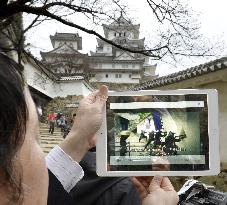
A visitor to Himeji Castle in Himeji, Hyogo Prefecture, western Japan, on March 17, 2015, watches samurai warriors in Japan's Sengoku (civil war) period in the 15th to 16th centuries reproduced on his tablet computer by means of augmented reality technology. The refurbished castle offered the AR service as part of a press preview before the opening of the structure to the public on March 27. (Kyodo) ==Kyodo

  •  
Mock feudal battle staged at samurai festival in Fukushima city

Mock feudal battle staged at samurai festival in Fukushima city

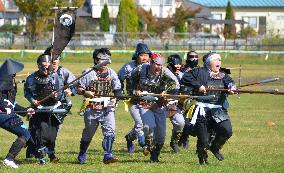
A reenactment of battles in the 15th to 16th centuries is staged as part of the Samurai Festival in Minamisoma in the northeastern Japanese prefecture of Fukushima on Nov. 1, 2015. (Kyodo) ==Kyodo

  •  
Foreigner joins mock feudal battle at samurai fest in Fukushima city

Foreigner joins mock feudal battle at samurai fest in Fukushima city

A foreign participant clad in samurai costume fights during a reenactment of battles in the 15th to 16th centuries at the Samurai Festival in Minamisoma in the northeastern Japanese prefecture of Fukushima on Nov. 1, 2015. (Kyodo) ==Kyodo

  •  
Trace of liquefaction found in ruins in Oita

Trace of liquefaction found in ruins in Oita

OITA, Japan - A man points to traces of soil liquefaction (white part) in the city of Oita, Japan, on Dec. 15, 2014, believed to have caused by a big earthquake between the 16th and 18th centuries. The traces were discovered during an excavation of a dwelling site in the remains from the age of provincial wars in the late 15th to 16th centuries. (Kyodo)

  •  
Bronze fitting from medieval period found in north Japan

Bronze fitting from medieval period found in north Japan

NANBU, Japan - A bronze fitting with two cranes facing each other -- a family crest of the medieval Nanbu clan --carved on it is shown in this photo taken in Nanbu, Aomori Prefecture, northeastern Japan, on Sept. 29, 2014. The fitting was found in the remains of a hilltop castle owned by the Nanbu clan from the 12th to 16th centuries. (Kyodo)

  • Main
  • Top
  • Editorial
  • Creative
  • About Us
  • About ILG
  • Terms of use
  • Company
  • BEHIND
  • Price List
  • Single Plan
  • Monthly Plan
  • Services
  • Shooting
  • Rights Clearance
  • Support
  • FAQ
  • How To Buy
  • Contact Us
  • Become a Partner

© KYODO NEWS IMAGES INC

All Rights Reserved.

  • Editorial
  • Olympics
  • News
  • Sports
  • Japan
  • Tech
  • Royal
  • Disaster
  • NorthKorea
  • Old Japan
  • SNS
  • Creative
  • Food
  • Japan
  • Landscape
  • Animal
  • Popular
  • #Ukraine
  • #Russia
  • #coronavirus
  • #N. Korea
  • #China
  • #Thailand
  • #Ukraine
  • #Russia
  • #coronavirus
  • #N. Korea
  • #China
  • #Thailand
  • Food
  • Japan
  • Landscape
  • Animal
  • Olympics
  • News
  • Sports
  • Japan
  • Tech
  • Royal
  • Disaster
  • NorthKorea
  • Old Japan
  • SNS